The Backstory Behind Coastal OC's Most Coveted Zip Codes
.jpg)
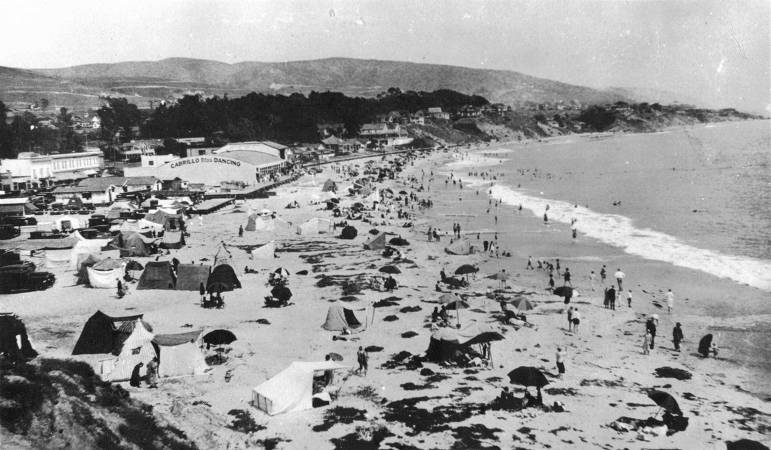
If you caught my Emerald Bay video, you already know every community along this coast has a backstory most people have never heard. I'm Clay - I'm a real estate agent based in Laguna Beach, and I cover the coastal Orange County market. Not just the listings, but the land, the history, and what it all actually means for buyers, sellers, and homeowners right now.
Here's a quick look at what's behind some of the most coveted zip codes in Orange County.
Laguna Beach
Hollywood stars and artists were flocking here in the 1920s, long before the real estate prices reflected it. What started as a colony of beach cottages rented to inland families escaping summer heat is now one of the most land-constrained, high-demand coastal markets in California. Seven miles of coastline. Three ways in. That geography is not an accident. It is the price driver.
The same constraints that made Laguna a summer escape a century ago are what make it nearly impossible to build in today. There is no room to add supply - which is exactly why demand never softens the way it does in other markets. When you buy in Laguna Beach, you are not buying a house. You are buying scarcity.
Newport Beach
Newport is one of the wealthiest cities per capita in the entire country. The harbor made it a commercial hub before it was a lifestyle destination. Today it holds some of the most expensive waterfront real estate in Southern California. On the Balboa Peninsula, properties trade more on slip access than square footage.
That shift from working harbor to luxury corridor happened gradually - and the transition is still visible in the bones of the city. The buyers who understand Newport's history tend to understand its value in a way that purely price-per-square-foot analysis cannot capture.
Dana Point
Founded in 1923 by three partners, one of whom was Harry Chandler - the man who owned the Los Angeles Times - Dana Point was sold street by street before a single home was built. The original Spanish-style homes from that era still stand and are some of the most sought-after properties in the city. Because of the proximity to Newport Beach, the harbor came later. Homeowners and builders alike understood that the value was always in the land.
"Dana Point was sold street by street before a single home was built. The value was always in the land."
That same principle holds today. The record sale at The Strand at Headlands - $32 million for an estate on Strand Beach Drive - is a direct line back to the original vision those three founders had for the point in 1923.
San Clemente
In 1925, a man named Ole Hanson bought 2,000 acres and designed an entire city from scratch. Spanish architecture, ocean views, and what he called a haven from the big city. Richard Nixon eventually agreed - he bought his Western White House here in 1968. The original Ole Hanson homes are still standing and trading at a premium for buyers who know what they are looking at.
San Clemente sits at the southern edge of Orange County, buffered from the density of its northern neighbors by geography and deliberate design. For buyers who value authenticity over visibility, it remains one of the most underappreciated values on the coast.
Irvine
Irvine did not become a city until 1971, but the land it sits on was assembled in 1864 from three Mexican land grants - similar to Emerald Bay's origins. That same land is now controlled by billionaire Donald Bren, the wealthiest real estate developer in the United States. Irvine is arguably the most successful master-planned real estate project in American history.
What most people do not know is that Bren's team controls not just the homes but the commercial corridors, the schools, and the open space ratios built into the plan. That level of design intentionality is exactly why Irvine property values remain stable in ways that adjacent, less planned cities do not.
What the History Actually Tells You
Every one of these cities has a current market story that is just as interesting as its history. The $110 million Emerald Bay sale did not happen in a vacuum - it happened because of 100 years of constrained supply, concentrated wealth, and a coastline that cannot be replicated. The same forces that shaped these communities in the 1920s are still shaping prices today.
Understanding where a market came from is one of the fastest ways to understand where it is going. If you want to know what your specific property is worth in the context of all of this - I'm happy to have that conversation.
Curious About What Your Home Is Worth?
Every one of these cities has a current market story that's just as interesting as its history. Let's talk about yours.
Let's Chat