When the Cliff Gives Way: Coastal Erosion and What It Means for Laguna Beach Homeowners
.jpg)
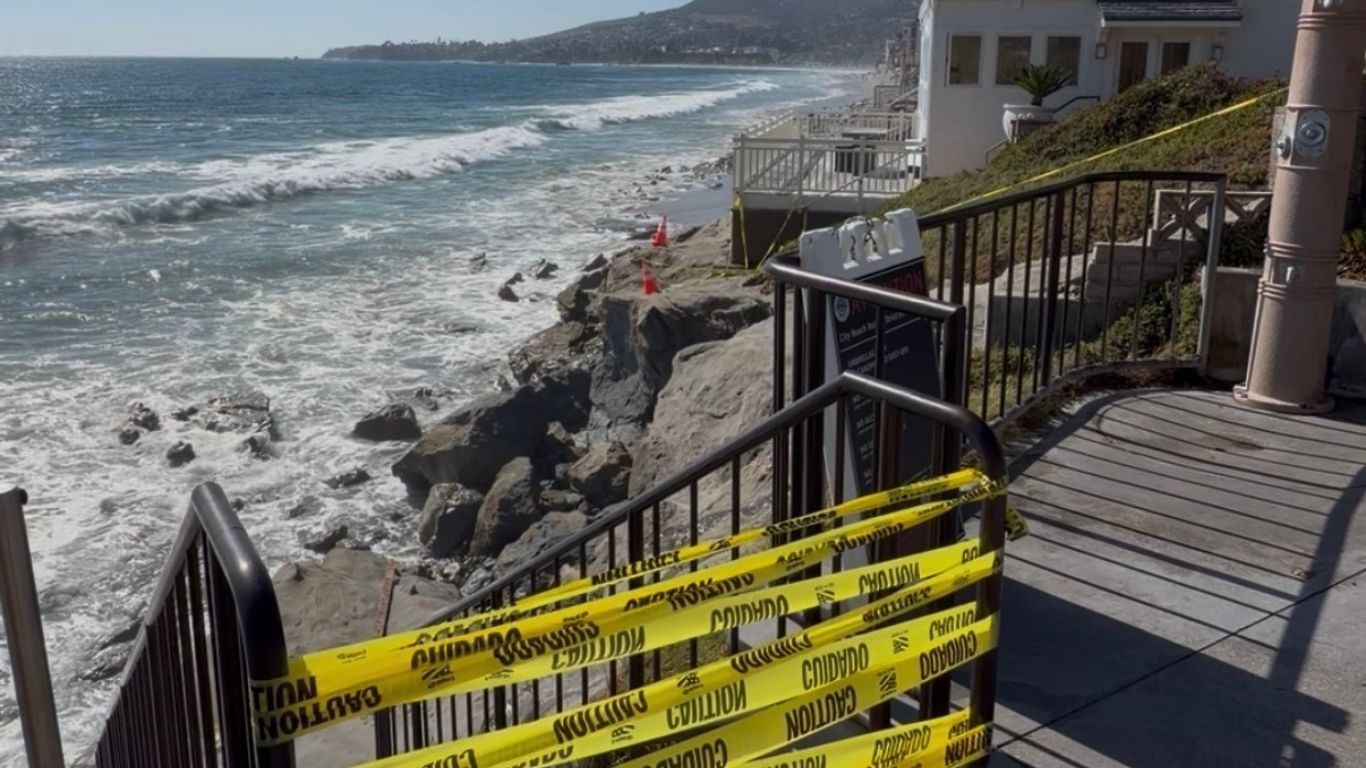
Laguna Beach is one of the most coveted coastal addresses in the country. Seven miles of bluffs, coves, and reef breaks. Ocean views that command some of the highest price-per-square-foot figures in California. A lifestyle built entirely around proximity to the water. But in the past 18 months, the coastline that defines this community has sent a series of clear signals: the land at the edge is moving, and property owners need to be paying attention.
This is not meant to alarm. It is meant to educate.
Two Collapses, One Coastline
On the morning of January 31, 2025, a bluff partially collapsed near Thousand Steps Beach, sending private stairs crashing to the sand. About 500 cubic yards of bluff material fell near Point Place, three nearby homes were temporarily evacuated, and a search-and-rescue dog was brought in to check the debris. No one was hurt, but the access staircase maintained by the local HOA was destroyed.
Then, on or about June 15, 2026, a rock slide occurred at Brooks Street, one of Laguna Beach's most iconic beach access points and home to the world's longest-running surf contest. The two events are separated by 18 months and a few miles of coastline. What they share is more significant than what separates them: pressure had been accumulating quietly along both bluffs for years, and then it released all at once.
The South Swell That Accelerated It
Days before the Brooks Street event, coastal Orange County absorbed one of the most powerful south swells in years. The largest south swell in years brought 10-to-15-foot waves to Newport Beach, with peak swells at the Wedge reaching over 20 feet. The physical damage was immediate and widespread. At Crystal Cove State Park, powerful waves chewed away at the shoreline, undermining lifeguard towers and sending at least one tumbling into the ocean. A Bobcat tractor parked near the beach was swallowed by the sea as severe erosion chewed away at the shoreline.
Crystal Cove lifeguard Jake Beckley, with six years on the beach, put it plainly: "Just the biggest waves I've ever seen here. We've lost pretty much the entire beach at certain points."
"Just the biggest waves I've ever seen here. We've lost pretty much the entire beach at certain points." — Crystal Cove Lifeguard Jake Beckley
This is the part that tends to surprise people: powerful surf does not just reshape sand at the water's edge. It saturates bluff bases, disrupts subsurface drainage, and destabilizes the hillsides above. The visible damage often arrives days after the water recedes. The Brooks Street collapse followed the swell by less than a week.
How Coastal Erosion Actually Works
Coastal erosion is a process, not a single event. It operates across decades and compresses into dramatic moments when storms, swells, and saturated soil align. It is not uncommon for cliffs next to the Pacific Ocean to erode and collapse. Experts warn the process is being accelerated by extreme climate conditions, including years of prolonged drought and wildfires followed by large storm systems.
As bluffs retreat, beaches narrow, public access points disappear, and the asset that gives coastal property its premium value gradually diminishes. The view remains. The usable beach below it may not. When sand disappears, foot traffic at local businesses shifts, neighborhood character changes, and demand at the most exposed locations can soften over time. This is not speculation. It is already observable up and down the Orange County coast.
What the City Can and Cannot Do
Following a collapse, the city responds with emergency personnel and geotechnical assessments. But long-term options are shaped by the California Coastal Commission, which governs all development within the coastal zone. The CCC operates under the doctrine of managed retreat, having officially determined that fighting the ocean is an environmental failure. Rather than allowing homeowners to build seawalls, the Commission prefers that structures eventually succumb to the ocean, thereby preserving natural sand and public beach access.
Getting a seawall or other shoreline armoring approved is difficult, and the Commission favors managed retreat as climate change accelerates bluff erosion. The city can clear debris, cordon off hazards, and commission geotechnical studies. It cannot authorize permanent protective structures for private properties without a permitting process that is deliberately rigorous and, in many cases, results in denial. Homeowners who assume a bluff collapse will automatically entitle them to build a protective wall are often surprised to find the answer is no.
What Coastal Homeowners Should Be Thinking About
- Get a geotechnical report. Before purchasing any blufftop or oceanfront property, commission an independent geotechnical study from a licensed engineer with California coastal experience. A standard home inspection does not cover bluff stability, and the two should not be confused.
- Read your natural hazard disclosures carefully. California requires sellers to disclose known geological risks. These disclosures are a starting point, not a complete picture. An experienced coastal agent will help you interpret what they do and do not reveal about a specific property.
- Check your insurance. Standard homeowners policies generally do not cover land movement or earth movement, even when triggered by wave action or storm saturation. If you own near a bluff, have a direct conversation with your insurer about what your policy actually covers.
- Know your bluff setback. Laguna Beach's certified Local Coastal Program requires a 25-foot bluff edge setback, consistently applied by both the city and the Coastal Commission based on site-specific geotechnical analysis. Properties close to that edge carry a meaningfully different risk profile than those set further back on the lot.
- Monitor your beach. Watch how much sand exists below your property across different seasons and after significant swell events. A narrowing or disappearing sand buffer is an early indicator of accelerating bluff pressure and deserves professional evaluation.
- Work with professionals who know the coastal zone. The regulatory environment in Laguna Beach is unlike most markets. Whether you are buying, building, or responding to a geological event on your property, the specific expertise of your agent, attorney, and contractor matters more than it does elsewhere.
The Bottom Line
The bluff events at Thousand Steps Beach and Brooks Street, combined with the dramatic erosion produced by the June 2026 south swell, are not isolated incidents. They are data points in a longer arc that every coastal property owner in Orange County should understand. The beach is dynamic. Sometimes it changes faster than expected, and sometimes that change arrives within a week of a major swell.
That is not a reason to walk away from the coast. Laguna Beach remains one of the premier coastal markets in the country, and owning here is a privilege that comes with real long-term value. But it is a reason to buy carefully, own thoughtfully, and plan with a clear-eyed understanding of the environment you are in. The homeowners who thrive here over the long term are the ones who treat that environment as a known variable rather than an invisible one.
Questions About a Coastal Property?
I work exclusively in the coastal OC market. If you have questions about a specific property, a bluff setback, or what erosion risk means for your purchase, let's talk.
Get a Free Property Analysis